Cat Chocolate Toxicity Calculator — Is It Dangerous?
Your cat sneaked a bite of chocolate. Now what? This calculator estimates the theobromine and caffeine dose your cat absorbed, compares it against the published toxic thresholds, and tells you whether you need to call the emergency vet right now. It draws on the toxicology data used by the ASPCA Animal Poison Control Center.
🚨 Emergency? Call now:
- ASPCA Animal Poison Control: (888) 426-4435 (consultation fee applies)
- Pet Poison Helpline: (855) 764-7661
- If symptoms have started, go to an emergency vet without waiting.
Cat Chocolate Toxicity Calculator
Enter your cat's weight, the chocolate type, and amount eaten. The calculator returns the dose and risk level instantly.
When in doubt, pick the stronger option to err on the safe side.
Reference: a Hershey's bar weighs 43 g (1.55 oz). A Hershey's Kiss is ~4.5 g. A teaspoon of cocoa powder is ~2.5 g.
View the formula used
Risk zones: <20 safe · 20-40 monitor · 40-60 moderate · 60-100 severe · >100 lethal
Source: ASPCA Animal Poison Control Center; Merck Veterinary Manual.
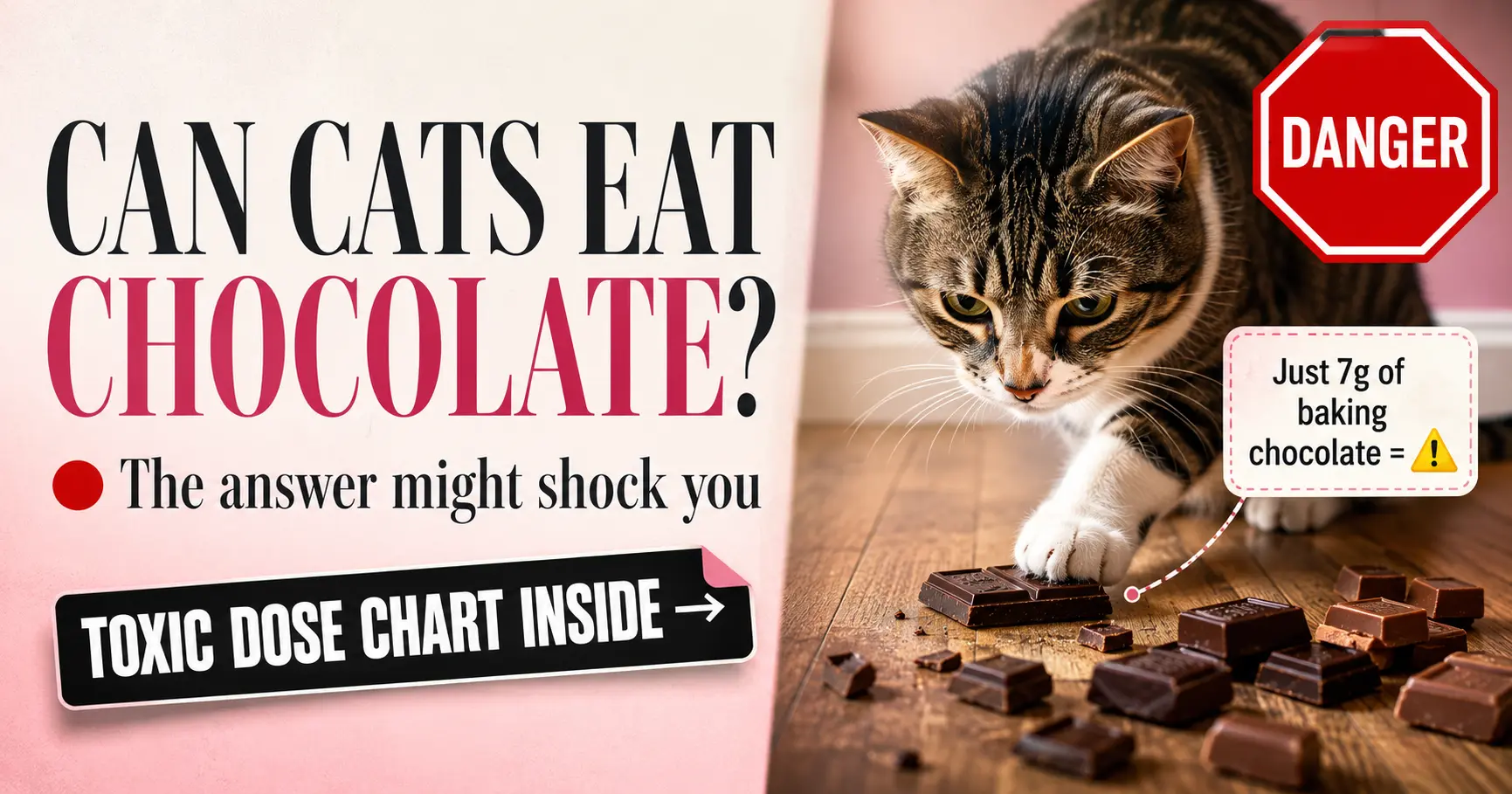
How to Use the Cat Chocolate Toxicity Calculator
Speed matters here. The whole process takes under thirty seconds.
- 1
Enter your cat's weight
Use the most recent weight from your vet records or a home weigh-in. Even a rough estimate works — the calculator's risk zones have wide enough buffers to absorb small weight errors.
- 2
Pick the closest chocolate type
Six options cover everything from white chocolate to pure cocoa powder. If the wrapper says 'semi-sweet' or '60% cacao', pick the closest dark option. When unsure, choose the stronger category to err on the side of caution.
- 3
Estimate the amount eaten
Use the unit toggle for grams or ounces. A standard Hershey's milk chocolate bar weighs 43 g (1.55 oz). A typical Ghirardelli square is around 11 g. A teaspoon of cocoa powder is roughly 2.5 g.
- 4
Read the risk level — and act if needed
The calculator shows the calculated mg/kg dose and assigns a colour-coded zone: green (safe), yellow (monitor), orange (moderate risk), or red (severe). Anything yellow or higher means contact a vet or poison hotline immediately.
Why Chocolate Is So Dangerous for Cats
Chocolate contains two methylxanthine compounds that cause the trouble: theobromine and caffeine. Both come from the cacao plant, Theobroma cacao — a name that literally translates to "food of the gods" in Greek.
Humans metabolise theobromine in about 2-3 hours. Cats need around 17 hours to process the same amount. This dramatic difference comes from low activity of the CYP1A2 enzyme in feline livers, the same reason cats struggle with paracetamol, ibuprofen, and many other common compounds.
Theobromine acts as a vasodilator, diuretic, heart stimulant, and smooth muscle relaxant. In small doses it causes restlessness and increased urination. In large doses it triggers seizures, cardiac arrhythmias, and respiratory failure. The lethal threshold sits around 100-200 mg/kg, but cats can die at lower doses if they have pre-existing heart conditions.
One small bit of good news: cats rarely seek out chocolate the way dogs do. Cats lack functional sweet taste receptors — a 2005 study published in PLOS Genetics found the Tas1r2 gene is non-functional in all felids, including domestic cats. Most cat poisonings happen by accident: a curious bite of a baking ingredient, frosting on a finger, or a stray truffle on the floor.
For more on cat-toxic foods generally, the ASPCA toxic substances list is the definitive reference.
Theobromine and Caffeine by Chocolate Type
Values below come from veterinary toxicology references. Brand-by-brand variation exists, but these averages are reliable enough for risk assessment.
| Chocolate type | Theobromine (mg/g) | Caffeine (mg/g) | Risk per 10g |
|---|---|---|---|
| White chocolate | 0.009 | 0.001 | Negligible |
| Milk chocolate | 2.0 | 0.2 | Low |
| Semi-sweet (45%) | 5.4 | 0.5 | Moderate |
| Dark (70%+) | 8.0 | 0.8 | High |
| Baking chocolate | 15.0 | 1.4 | Severe |
| Cocoa powder | 20.0 | 1.8 | Severe |
Toxicity Risk Zones for Cats
The calculator uses these published thresholds, expressed as milligrams of theobromine per kilogram of body weight.
Safe
< 20 mg/kgBelow the threshold for clinical symptoms. Watch for mild GI upset over the next 12 hours.
Monitor
20–40 mg/kgMild symptoms possible: restlessness, increased thirst, mild vomiting. Call a poison helpline for guidance.
Moderate
40–60 mg/kgSignificant risk. Expect tachycardia, hyperactivity, tremors. Veterinary care needed within hours.
Severe
60–100 mg/kgSevere toxicity. Seizures, cardiac arrhythmias, internal bleeding possible. Emergency vet visit now.
Potentially lethal
> 100 mg/kgLethal dose threshold. Death possible without immediate treatment. Drive to emergency vet without delay.
Symptoms and How They Progress
Theobromine takes 1-4 hours to peak in the bloodstream, so symptoms rarely appear immediately. Most show up between 6 and 12 hours after ingestion. Because theobromine's half-life in cats stretches around 17 hours, symptoms can persist for 72 hours or longer.
Watch for these stages:
Early (2-6 hours)
- Restlessness or unusual energy
- Increased thirst and urination
- Mild vomiting
- Panting
Moderate (6-12 hours)
- Rapid heart rate (tachycardia)
- Muscle tremors
- Hyperactivity then weakness
- Diarrhoea
Severe (12-24 hours)
- Seizures
- Cardiac arrhythmia
- Internal bleeding
- Collapse
Late (24-72 hours)
- Continued cardiac instability
- Pancreatitis (from fat content)
- Possible kidney impact
- Risk persists for the full 72 hours
What to Do if Your Cat Ate Chocolate
Step-by-step action plan:
- Stay calm and act quickly. Most chocolate ingestions in cats end well with prompt action.
- Identify the chocolate. Note the type (milk, dark, baking, etc.), brand if possible, and approximate amount missing.
- Estimate the time of ingestion. If you saw it happen, note the exact time. If not, take your best guess.
- Run the numbers through this calculator to see the risk zone.
- Call professional help. ASPCA Animal Poison Control: (888) 426-4435. Pet Poison Helpline: (855) 764-7661. Or your regular vet.
- Do not induce vomiting at home unless specifically directed by a professional. Hydrogen peroxide is dangerous for cats — it can cause severe ulceration.
- If symptoms are already present, drive to the emergency vet without waiting for further guidance.
- Bring the packaging with you to the vet. Cocoa percentage on the wrapper helps with precise dose calculation.