"Is my cat a healthy weight?" and "Is my cat too big to be a Siamese?" are two different questions — but they share the same starting point. Understanding cat size by breed means understanding two separate things at once: what the numbers on the scale mean, and what the frame and structure beneath those numbers tell you.
Most cat weight guides give you a single number. "Average domestic cat weighs 10 lbs." That number is nearly useless. A 10 lb Siamese is significantly overweight. A 10 lb Maine Coon is a lightweight juvenile. The same number means completely different things depending on the breed — and on the individual cat's skeletal frame within that breed.
This guide gives you the actual weight ranges for the most common breeds, explains what those ranges mean for health assessment and breed identification, and covers why a cat can fall outside the breed standard range and still be perfectly healthy.
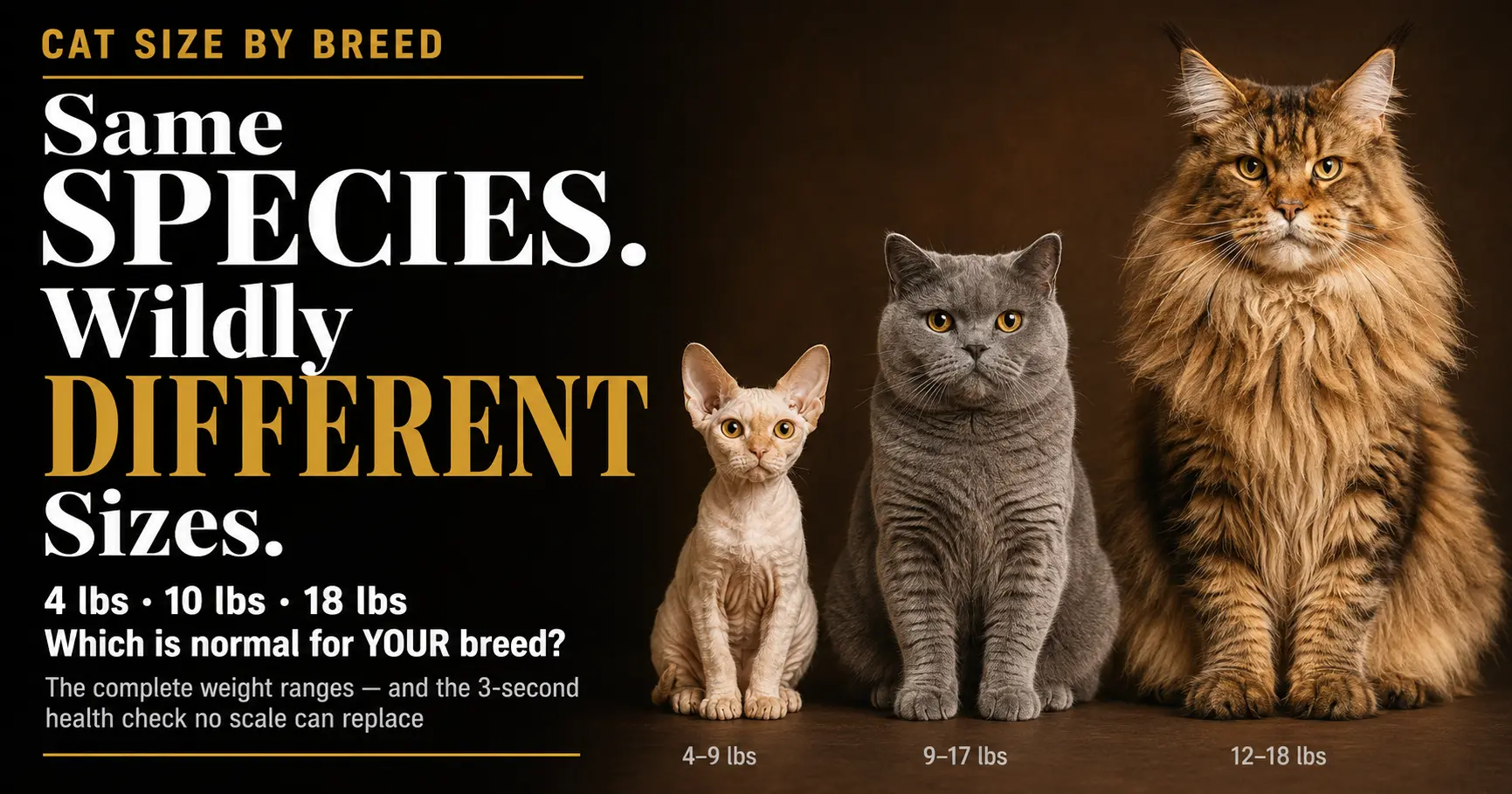
Cat Size and What It Actually Tells You
Cat size communicates two distinct types of information. The first is health status — whether a cat's weight is appropriate for its skeletal frame. The second is breed signal — whether a cat's size and frame architecture are consistent with a specific breed's standards.
Neither reading works from weight alone. A cat weighing 14 lbs can be morbidly obese (a Siamese), very healthy (a male Maine Coon), or slightly underweight (a large male Siberian). The weight number requires a frame context before it means anything.
Skeletal frame — the size of the underlying bone structure — is the correct reference point for any size assessment. Frame size shows up most clearly in three places: paw size, shoulder width, and the length of the leg bones relative to body length. A cat with large paws, wide shoulders, and long leg bones has a large skeletal frame and should weigh significantly more than a cat with small paws, narrow shoulders, and short legs — even if both cats look "normal" from a distance.
Muscle mass adds a second layer. Active breeds — Bengals, Abyssinians, Savannahs — carry denser muscle relative to their skeletal frame than sedentary breeds. A muscular Bengal at 10 lbs looks and feels entirely different from a sedentary domestic shorthair at 10 lbs. The Bengal's weight is compact and hard; the domestic shorthair's may carry significantly more fat at the same number.
The practical starting point: assess frame first, then check whether the weight is appropriate for that frame. The breed standard gives you the expected weight range for the frame that breed builds — which is why knowing the breed matters before assessing whether a cat's weight is healthy or concerning.
The Weight Ranges: Small, Medium, Large, and Giant Breeds
Domestic cat breeds divide cleanly into four size categories. Understanding which category a breed falls into is the fastest way to calibrate what a healthy weight looks like.
Small Breeds (4–8 lbs adult)
The smallest domestic cat breeds cluster around 4 to 8 lbs for females and 6 to 9 lbs for males at healthy adult weight.
The Singapura is the smallest recognised domestic cat breed — females average just 4 to 6 lbs. The Devon Rex runs small at 5 to 8 lbs for both sexes, its lightweight frame reflecting its extremely fine bone structure. The Cornish Rex sits similarly at 5 to 8 lbs. The Abyssinian runs lean and light at 6 to 10 lbs despite its athletic build — the low weight reflects extremely fine bone rather than lack of muscle.
A cat from one of these breeds weighing above the top of its range warrants honest examination. An 11 lb Devon Rex or a 12 lb Abyssinian is almost certainly carrying excess body fat — not evidence of a mixed background or a particularly impressive specimen.
Medium Breeds (7–12 lbs adult)
The largest category by number of breeds. Most popular domestic breeds fall here.
The Siamese runs 6 to 10 lbs for females and 8 to 12 lbs for males — the upper end of that range should still feel lean and angular, not soft. The Russian Blue sits at 7 to 12 lbs. The Burmese at 6 to 10 lbs. The Scottish Fold at 6 to 13 lbs. The Bengal at 8 to 15 lbs — the upper end of this range comes from muscle density rather than fat, and a 15 lb Bengal feels completely different from a 15 lb overweight domestic cat.
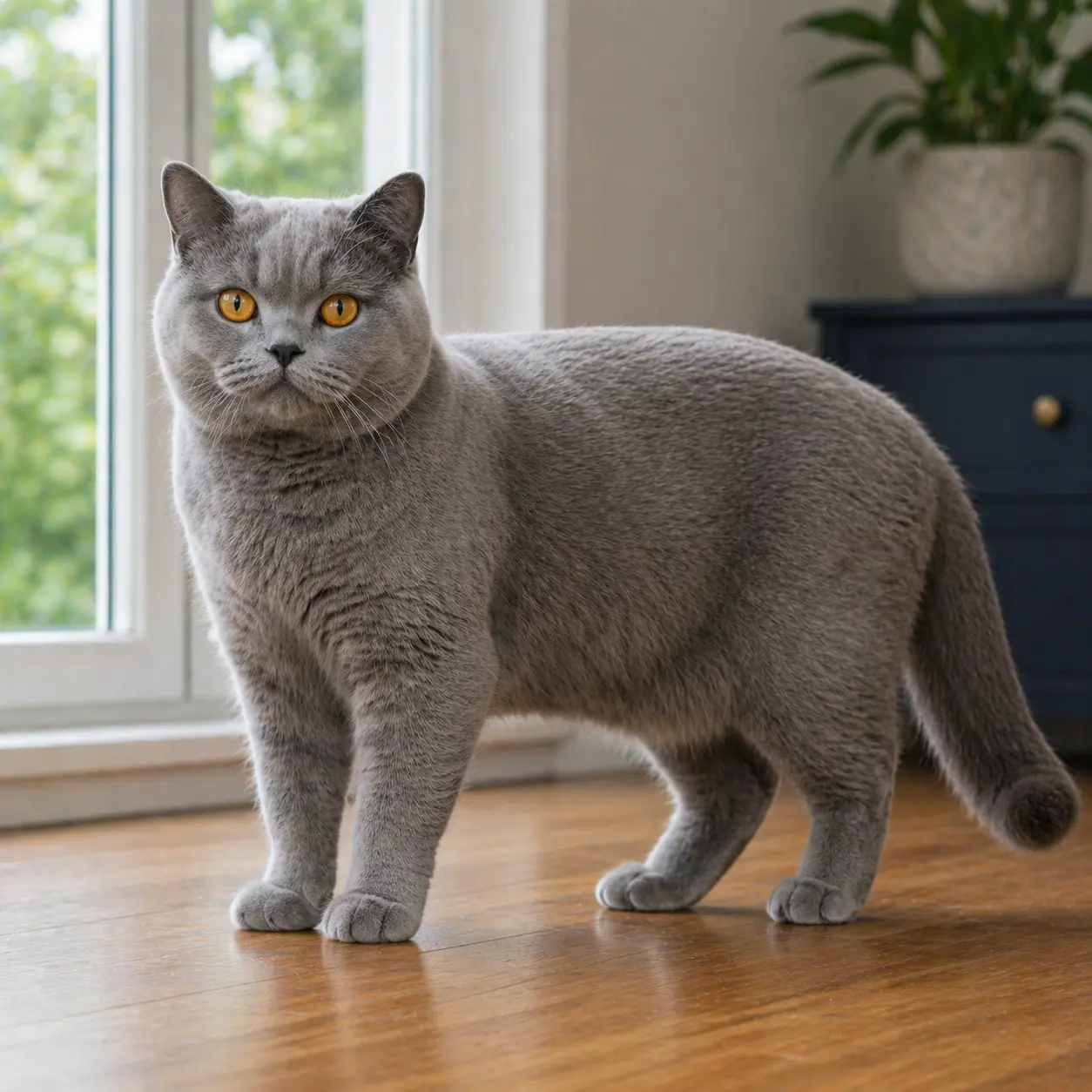
The British Shorthair sits at 7 to 17 lbs — a wide range that reflects significant sexual dimorphism. Males can reach 17 lbs and still be within healthy weight for their cobby, dense frame. A British Shorthair at 17 lbs requires a completely different frame assessment than a Siamese at 12 lbs.
Large Breeds (10–18 lbs adult)
Large breeds carry genuinely bigger skeletal frames — larger paws, wider chests, longer leg bones — and their healthy weight ranges reflect that architecture.
The Ragdoll runs 10 to 15 lbs for females and 15 to 20 lbs for males. The Norwegian Forest Cat sits at 8 to 16 lbs, slightly lighter than the Ragdoll on average. The Siberian runs 8 to 17 lbs — males at the top of this range should still feel dense and muscular rather than soft. The Turkish Van sits at 7 to 19 lbs — one of the widest healthy weight ranges of any breed, with large-framed males regularly reaching the upper end.
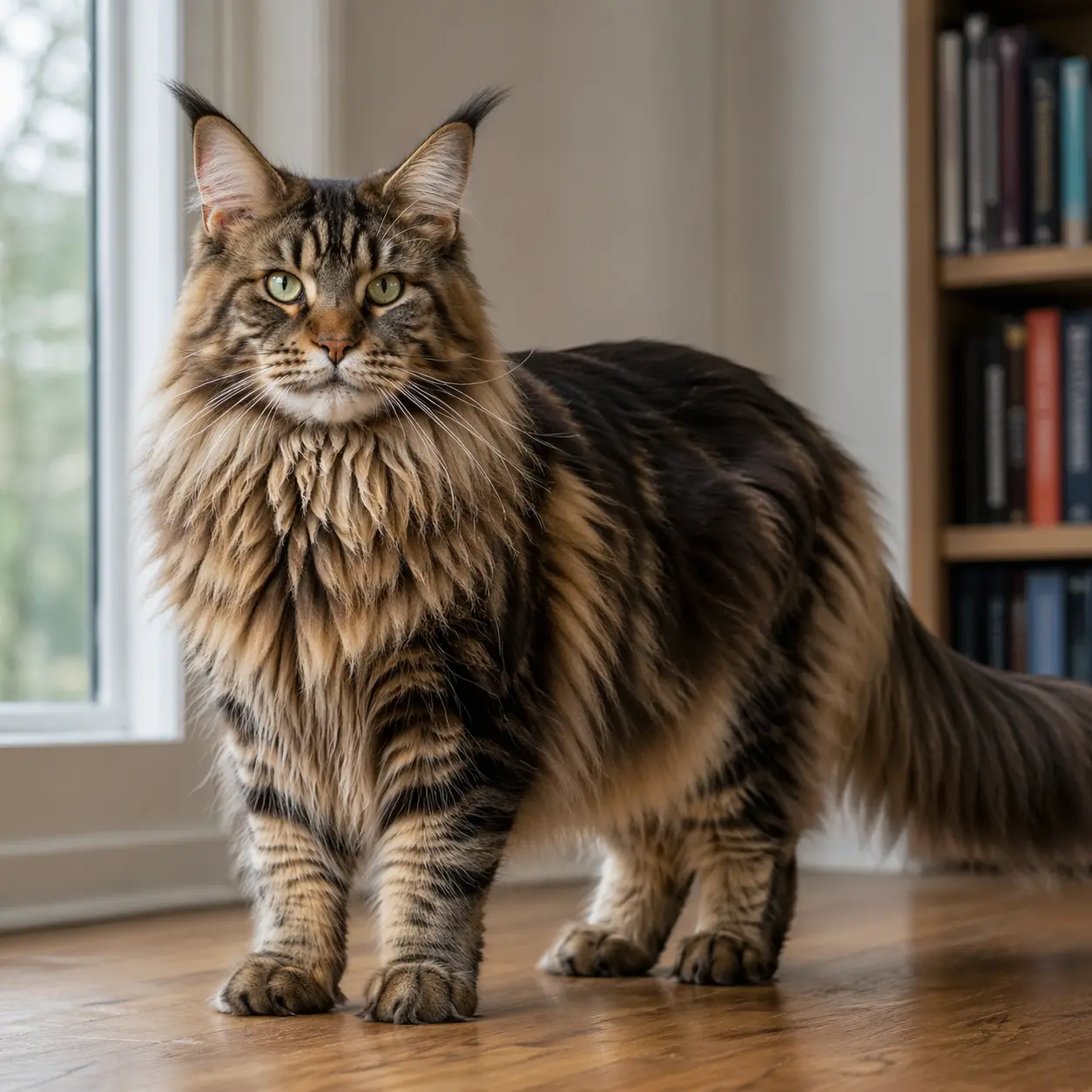
The Maine Coon sits at 8 to 14 lbs for females and 12 to 18 lbs for males. Males above 20 lbs exist and occasionally are celebrated online, but 20+ lbs in any cat — including Maine Coons — usually indicates excess body fat rather than exceptional size. Genuinely enormous Maine Coons in the 18 to 20 lb range are rare even within the breed and typically belong to males with exceptionally large skeletal frames.
Giant/Extreme Breeds (15–25 lbs adult)
The Savannah — a domestic cat and African Serval hybrid — produces the largest domestic cat bodies, with F1 and F2 Savannahs (closer to the wild ancestor) reaching 25 lbs or more. Later-generation Savannahs (F5, F6) run closer to large domestic cat weight at 12 to 20 lbs. The Savannah's long-legged frame makes it appear even larger than its weight suggests.
The Maine Coon sits at the upper end of the standard domestic range and the lower end of the giant category depending on the individual. A 20 lb Maine Coon with a clearly enormous skeletal frame — very large paws, wide shoulders, long leg bones — is a genuinely large cat. A 20 lb Maine Coon with an average frame is an overweight cat.
Body Condition Score: A Better Measure Than Weight Alone
Weight is the wrong primary measurement for assessing whether a cat is healthy. The correct measurement is the body condition score — a systematic assessment of fat coverage over specific bony landmarks on the cat's body.
The most widely used body condition score scale runs from 1 to 9. A score of 4 to 5 indicates ideal body condition for most breeds. Scores below 4 indicate underweight; scores above 5 indicate overweight; a score of 8 or 9 indicates obesity.
The practical assessment uses three landmarks:
Ribs: Run your fingers firmly along the ribcage. In an ideal-weight cat, you feel the ribs easily with slight pressure but cannot see them prominently. In an overweight cat, you cannot feel the ribs without pressing firmly. In an underweight cat, the ribs are immediately visible and feel sharp under minimal pressure.
Waist: Look at your cat from above. An ideal-weight cat shows a visible waist — a narrowing behind the ribs. An overweight cat shows no waist, or the sides bulge outward past the ribs. An underweight cat shows a dramatic hourglass narrowing.
Abdominal tuck: View the cat from the side. The abdomen should tuck upward slightly behind the ribs. An overweight cat shows a pendulous or flat belly.
The American Animal Hospital Association emphasises that body condition scoring outperforms weight-alone assessment precisely because it accounts for individual frame variation — the factor that makes a single target weight meaningless across different-sized cats of the same breed, let alone across different breeds.
A body condition score of 5/9 on a 10 lb Abyssinian and a 5/9 on a 16 lb male Maine Coon represent equally healthy cats — the same physiological condition at dramatically different weights.
Breed Size Reference Table
| Breed | Female weight | Male weight | Size category | Frame type |
|---|---|---|---|---|
| Singapura | 4–6 lbs | 6–8 lbs | Small | Very fine bone |
| Devon Rex | 5–7 lbs | 6–9 lbs | Small | Fine, lightweight |
| Abyssinian | 6–9 lbs | 7–10 lbs | Small–Medium | Fine, athletic |
| Siamese | 6–10 lbs | 8–12 lbs | Medium | Fine, tubular |
| Russian Blue | 7–10 lbs | 8–12 lbs | Medium | Fine–medium |
| Burmese | 6–9 lbs | 8–12 lbs | Medium | Compact, dense |
| Bengal | 8–12 lbs | 10–15 lbs | Medium–Large | Athletic, muscular |
| Scottish Fold | 6–9 lbs | 9–13 lbs | Medium | Cobby, rounded |
| Persian | 7–10 lbs | 9–14 lbs | Medium | Cobby, dense |
| American Shorthair | 8–12 lbs | 11–15 lbs | Medium–Large | Sturdy, medium |
| British Shorthair | 7–12 lbs | 9–17 lbs | Medium–Large | Cobby, very dense |
| Birman | 7–12 lbs | 9–14 lbs | Medium | Medium, moderate |
| Norwegian Forest Cat | 8–12 lbs | 10–16 lbs | Large | Substantial, athletic |
| Siberian | 8–12 lbs | 11–17 lbs | Large | Heavy, barrel-chested |
| Ragdoll | 10–15 lbs | 15–20 lbs | Large | Large, muscular |
| Turkish Van | 7–12 lbs | 12–19 lbs | Large | Long, athletic |
| Maine Coon | 8–14 lbs | 12–18 lbs | Large | Rectangular, dense |
| Savannah (F5+) | 8–12 lbs | 12–20 lbs | Large–Giant | Very tall, long-legged |
Breed Size as an Identification Signal
Size works as an identification signal in specific, limited ways — and fails completely in others. Understanding which is which prevents a common identification error.
Size eliminates breed categories reliably. A genuinely small adult cat — 5 to 7 lbs with a clearly fine skeletal frame — eliminates the large and giant breeds immediately. An adult cat in the 15 to 18 lb range with a large skeletal frame eliminates small and most medium breeds. This elimination function is reliable and fast.
Size does not confirm a specific breed. Multiple breeds overlap significantly in weight range. The British Shorthair, American Shorthair, Siberian, and Ragdoll all produce cats in the 10 to 14 lb range. Weight alone cannot distinguish between them. Frame architecture — the specific bone structure, body shape, and proportion — is the distinguishing tool. The cat body type and breed identification guide covers how frame shape and body proportions separate these overlapping-weight breeds far more accurately than weight measurement alone.
Relative size within a litter is more informative than absolute size in young cats. The largest kitten in a mixed-breed litter often carries genetics from a larger breed — paw size at eight weeks is a reasonable predictor of adult frame size and therefore adult weight range.
The most common domestic cat breeds visual guide covers each breed's physical appearance alongside its typical size range — which is the combination most useful for identification when you are working from both visual features and size data simultaneously.
When Your Cat's Size Doesn't Match the Breed Standard
Several legitimate reasons exist for a cat falling outside its breed's expected weight range — and not all of them indicate a problem or a mixed background.
Sexual dimorphism creates wide within-breed variation. Maine Coon males and females differ by as much as 6 lbs at healthy adult weight. British Shorthair males can weigh nearly double a petite female of the same breed. Comparing a female's weight to a male's standard, or vice versa, gives a misleading picture.
Slow-maturing breeds have not reached their adult weight by the age at which most owners assess them. Maine Coons, Ragdolls, and Siberians continue adding mass until age three to five. A Maine Coon male at 18 months may weigh 11 lbs — below the breed standard's expected adult range — and reach 16 lbs by age four. Assessing size too early in slow-maturing breeds produces underestimates.
Mixed ancestry produces cats that fall between breed standards. A Maine Coon and domestic shorthair cross typically produces adults in the 10 to 13 lb range — larger than most domestic shorthairs but smaller than a purebred Maine Coon. The size, in this case, accurately reflects the genetic mix rather than indicating an error in either parent's size contribution.
Nutrition and health history affect adult size in any breed. A kitten raised on inadequate nutrition during the first six months may reach a smaller adult frame than its genetics would otherwise produce. Conversely, free-feeding sedentary cats of any breed exceed their breed's healthy weight range without any additional genetic explanation.
What Size and Frame Reveal About a Cat
Size and frame together — rather than weight alone — tell a meaningful identification story. The framework works like this:
Assess the paw size first. Large, wide, round paws with inter-digital tufting indicate a large-frame breed. Small, neat paws with fine bone indicate a small-frame breed. Paw size at any age is a reliable preview of adult skeletal frame.
Assess the chest width second. A wide, deep chest indicates a cobby or large breed — British Shorthair, Maine Coon, Siberian. A narrow, keel-like chest indicates a fine-boned Oriental or small breed — Siamese, Abyssinian, Devon Rex.
Assess the leg length third. Long legs relative to body length indicate either a large frame breed (Maine Coon, Norwegian Forest Cat) or an athletic lean breed (Abyssinian, Savannah). Short legs on a wide body indicate a cobby breed (British Shorthair, Persian, Scottish Fold).
These three assessments — paws, chest, legs — give you the skeletal frame category. The breed reference table above then narrows the candidate list. From there, physical feature identification closes in on the specific breed.
For cats where size, coat, and body type all suggest a specific breed but the picture remains uncertain, our cat DNA testing guide explains what breed ancestry tests measure and what they can realistically confirm from size-related breed candidates.
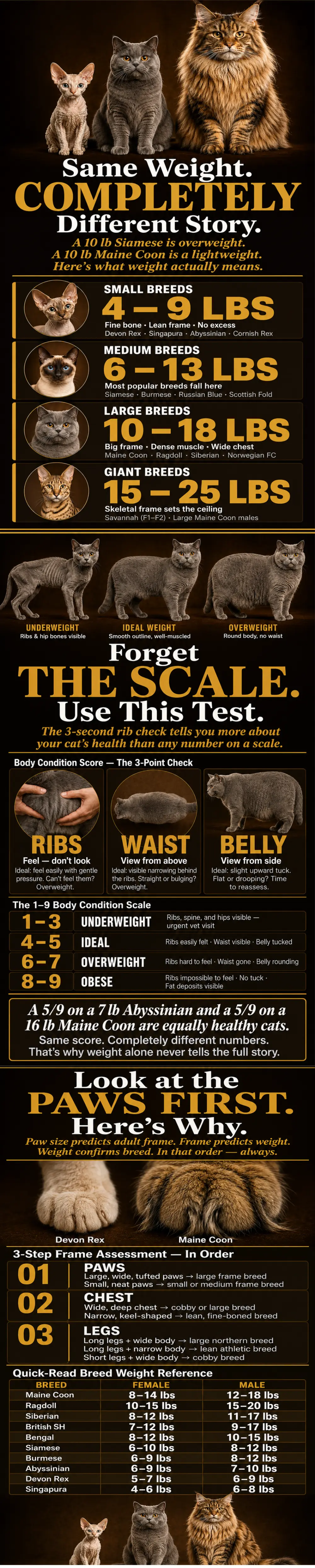
We have put together a visual infographic summarising cat size by breed — covering the four size categories with actual weight ranges, the body condition scoring landmarks, and the frame assessment framework — in a single reference image you can save and use whenever you need it.
The body condition score section is the most practically useful element for owners concerned about their cat's health weight rather than its breed classification — it gives you a method you can use with your hands rather than a scale.
Frequently Asked Questions
Cat size by breed: which breed produces the largest domestic cats?
The Maine Coon and the Ragdoll consistently produce the largest domestic cat bodies within standard registries. Maine Coon males reach 12 to 18 lbs at healthy adult weight with a rectangular, muscular frame. Ragdoll males reach 15 to 20 lbs — making them slightly heavier on average. The Savannah breed, depending on its generation from the African Serval ancestor, can exceed both — early-generation F1 and F2 Savannahs regularly reach 20 to 25 lbs. Within unregistered domestic cats, size is highly variable and not reliably predictable from parentage alone.
How do I know if my cat is overweight for its breed?
Run your fingers firmly along your cat's ribcage. If you can feel the ribs easily with gentle pressure but cannot see them prominently, your cat is likely at a healthy weight. If you need to press firmly before feeling anything, the cat is likely carrying excess body fat regardless of what the scale reads. View the cat from above — an ideal weight cat shows a visible waist narrowing behind the ribs. From the side, the abdomen should tuck slightly upward rather than hanging level or drooping. These body condition score assessments work across all breeds and account for individual frame variation in a way that a single target weight number cannot.
Cat breed weight: does a very heavy cat always mean large breed ancestry?
Not necessarily. A cat can exceed typical domestic cat weights through excess body fat rather than large skeletal frame. The critical distinction is whether the weight comes from large bone structure or from fat coverage over a normal or small frame. A genuinely large-framed cat shows large paws relative to body size, wide shoulder structure, and long leg bones. A simply overweight cat shows normal or small paws, narrower shoulders, and legs that look proportionally short because fat has increased the body volume without increasing the skeletal frame. Assessing paw size and shoulder width tells you more about potential large breed ancestry than any scale reading.
What is a normal weight for a domestic cat with no known breed?
For an average-framed domestic cat — medium paw size, moderate chest width, neither cobby nor particularly leggy — a healthy adult weight sits between 8 and 12 lbs. Females typically run lighter at 7 to 10 lbs; males run heavier at 9 to 12 lbs. These are not targets but ranges — a domestic cat at 7 lbs with a clearly small, fine frame is perfectly healthy, while a domestic cat at 12 lbs with a clearly small frame may be overweight. The body condition score assessment, rather than these numbers, is the correct tool for any individual cat regardless of breed.
At what age is a cat considered fully grown in size?
Most domestic cat breeds reach physical maturity between 12 and 18 months. The notable exceptions are the large and giant breeds: Maine Coons, Ragdolls, Siberians, and Norwegian Forest Cats continue adding body mass and coat development until age three to five years. This means a two-year-old Maine Coon or Ragdoll may weigh significantly less than the breed's adult standard and still be growing. Assessing a slow-maturing breed's size at 18 months produces an underestimate of adult size that can lead to incorrect breed conclusions. If a large-framed young cat seems smaller than expected for its breed, wait — it is likely still on its way to full size.