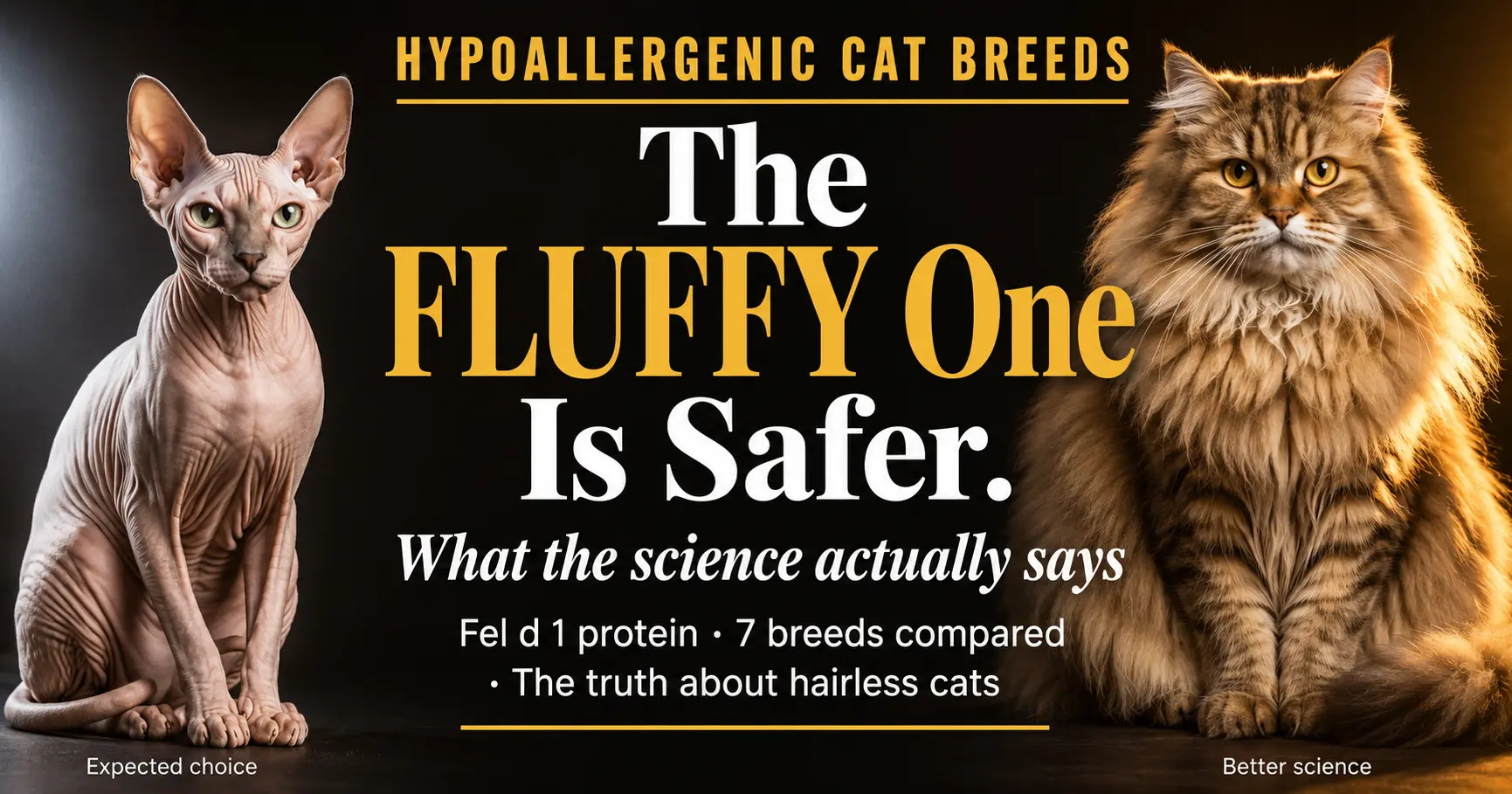
No cat is hypoallergenic. Not the Sphynx. Not the Siberian. Not the Balinese. Every single domestic cat produces the protein that triggers allergic reactions in humans. The difference between breeds is not whether they produce it — it is how much.
That distinction matters enormously for anyone with cat allergies who wants to share their home with a cat. The gap between the highest-allergen and lowest-allergen breeds is real, measurable, and large enough to make a clinical difference for many allergy sufferers. But the word "hypoallergenic" has been applied so broadly — to hairless cats, short-haired cats, and specific breeds with almost no scientific basis — that most people researching this question start with completely wrong assumptions.
This guide gives you the actual science behind cat allergies, the breeds that peer-reviewed research identifies as lower allergen, and the practical steps that matter as much as breed selection when managing cat allergy symptoms.
Cat Allergies: What You're Actually Reacting To
Most people assume cat allergies are triggered by cat hair. They are not. Cat hair is simply the vehicle. The actual allergen is a small glycoprotein called Fel d 1 — produced primarily in a cat's sebaceous glands, salivary glands, and anal glands.
When a cat grooms itself, Fel d 1-laden saliva coats the fur. The saliva dries. The protein becomes airborne on microscopic particles of dead skin — dander — and on shed fur. Those particles land on furniture, clothing, and bedding, where they persist for months even after the cat has left the environment.
This mechanism explains several things that confuse allergy sufferers. It explains why hairless cats still trigger reactions — the Sphynx produces Fel d 1 from its skin glands and its saliva like any other cat, and without fur to trap the particles, they disperse into the air more freely. It explains why some people react more strongly to male cats than females — intact males produce significantly more Fel d 1 than females or neutered males. And it explains why reducing shedding alone does not reliably reduce allergic reactions — the protein, not the hair, is the problem.
The short-haired versus long-haired cat breeds guide covers how coat length affects shedding patterns across breeds — which is useful context for understanding how different coat types influence allergen distribution in a home environment, even if coat length is not the primary factor in allergen production.
According to the American Academy of Allergy, Asthma & Immunology, cat allergens are among the most pervasive indoor allergens, with Fel d 1 detectable in virtually all homes regardless of whether a cat has ever lived there — carried on clothing and through ventilation from neighbouring spaces. That baseline exposure level matters when assessing whether a lower-allergen breed will genuinely make a difference in a specific person's symptom load.
No Cat Is Truly Hypoallergenic — But the Gap Is Real
The range of Fel d 1 production across individual cats and breeds spans several orders of magnitude. Some cats produce ten times as much as others. That range creates meaningful real-world differences in allergen exposure even though no cat drops to zero.
Sex and neuter status create the largest differences within a breed. Intact males produce the most Fel d 1. Neutered males produce significantly less — research suggests a reduction of 40 to 60% in some studies. Females produce the lowest baseline amounts. For an allergy sufferer choosing any breed, a neutered male or a female of a lower-allergen breed is meaningfully better than an intact male of the same breed.
Individual variation within breeds is substantial. Two Siberian cats of the same sex and neuter status can produce dramatically different Fel d 1 levels. Breed is a starting point — not a guarantee. The most responsible breeders of lower-allergen breeds offer allergen testing of their specific breeding cats, allowing prospective owners to assess the actual levels their kitten's parents produce before committing.
Age affects production. Kittens generally produce less Fel d 1 than adult cats. Production increases as cats mature. A kitten visit that produces no allergic reaction does not guarantee the adult cat will have the same effect — the allergen load typically increases as the cat reaches full adulthood.
The honest framing: "lower allergen" is more accurate than "hypoallergenic." For mild-to-moderate allergy sufferers, a genuinely lower-producing breed combined with practical management steps can make shared living fully comfortable. For severe allergy sufferers, no breed reliably achieves this without additional medical intervention.
Breed Profiles: The Lowest-Allergen Cats Available
The following breeds have documented lower Fel d 1 production relative to the general cat population — either through peer-reviewed research or through consistent reports from allergy specialists and allergy-sufferer communities. They are not listed in a ranking order because individual variation makes any ranking misleading.
Siberian
The Siberian is the most studied low-allergen breed. Research indexed in the National Institutes of Health research database has found that some Siberian cats produce significantly lower levels of Fel d 1 than average — with certain lines showing particularly consistent results. The Siberian is a large, semi-longhaired breed from Russia, and the low-allergen quality appears to vary by bloodline. This is why responsible Siberian breeders test their breeding cats' Fel d 1 levels — bloodline matters more than breed name alone.
Balinese
The Balinese — essentially a longhaired Siamese — consistently appears in lower-allergen breed lists despite its full coat. The reason is biological rather than coat-related: Balinese cats produce less Fel d 1 protein at the source. The coat length is irrelevant to the allergen mechanism. Many allergy sufferers report better tolerance of Balinese cats than short-haired breeds that produce higher Fel d 1 levels.
Devon Rex
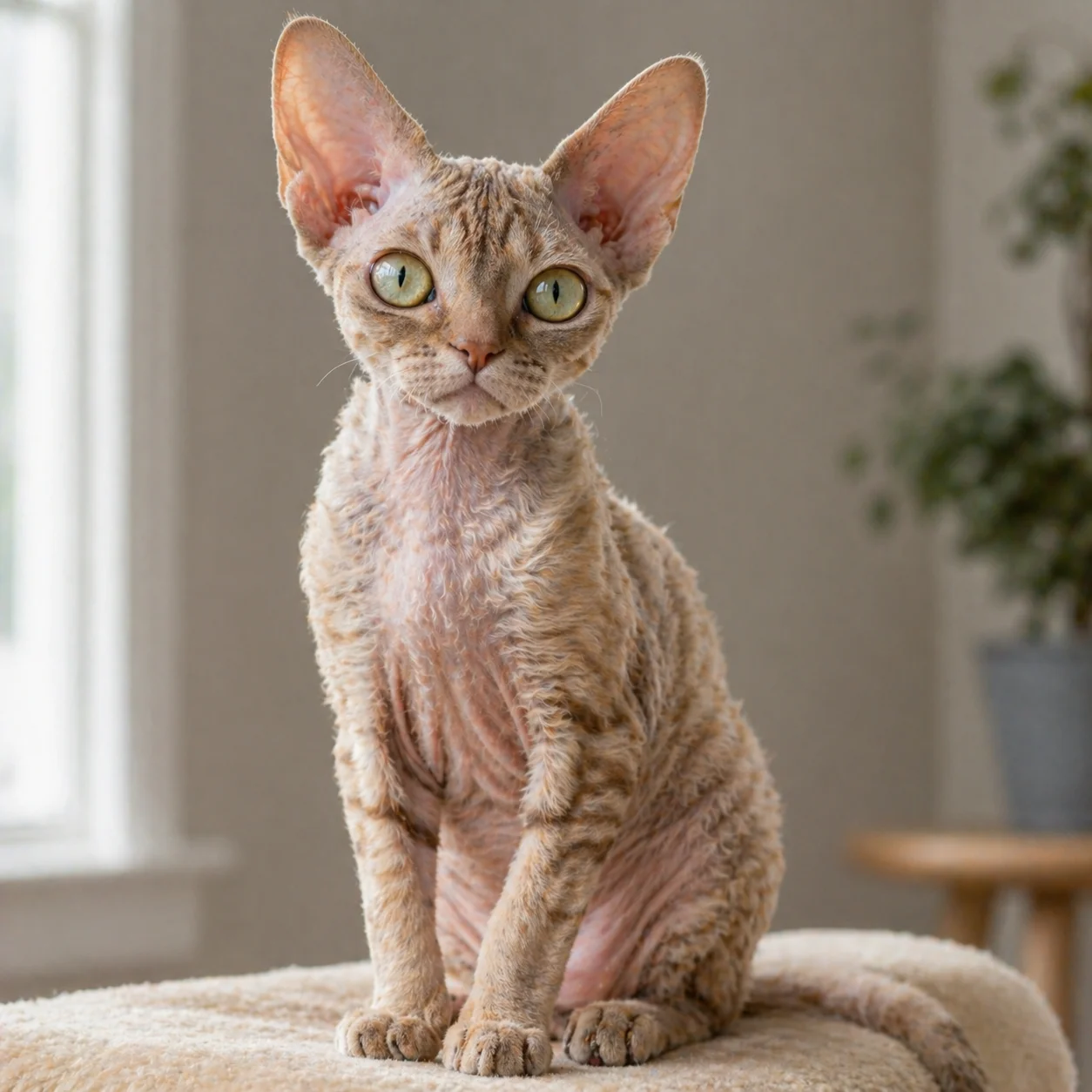
The Devon Rex carries a thin, rippled coat with minimal guard hairs. It sheds less than most cats — not because it produces less Fel d 1, but because less fur means less surface area for dried saliva and protein to accumulate on before dispersal. The Devon Rex does not appear in all lower-allergen research, but the reduced physical shedding translates to reduced allergen distribution in many real-world environments. The mechanism differs from the Siberian and Balinese — it is about delivery, not production.
Sphynx
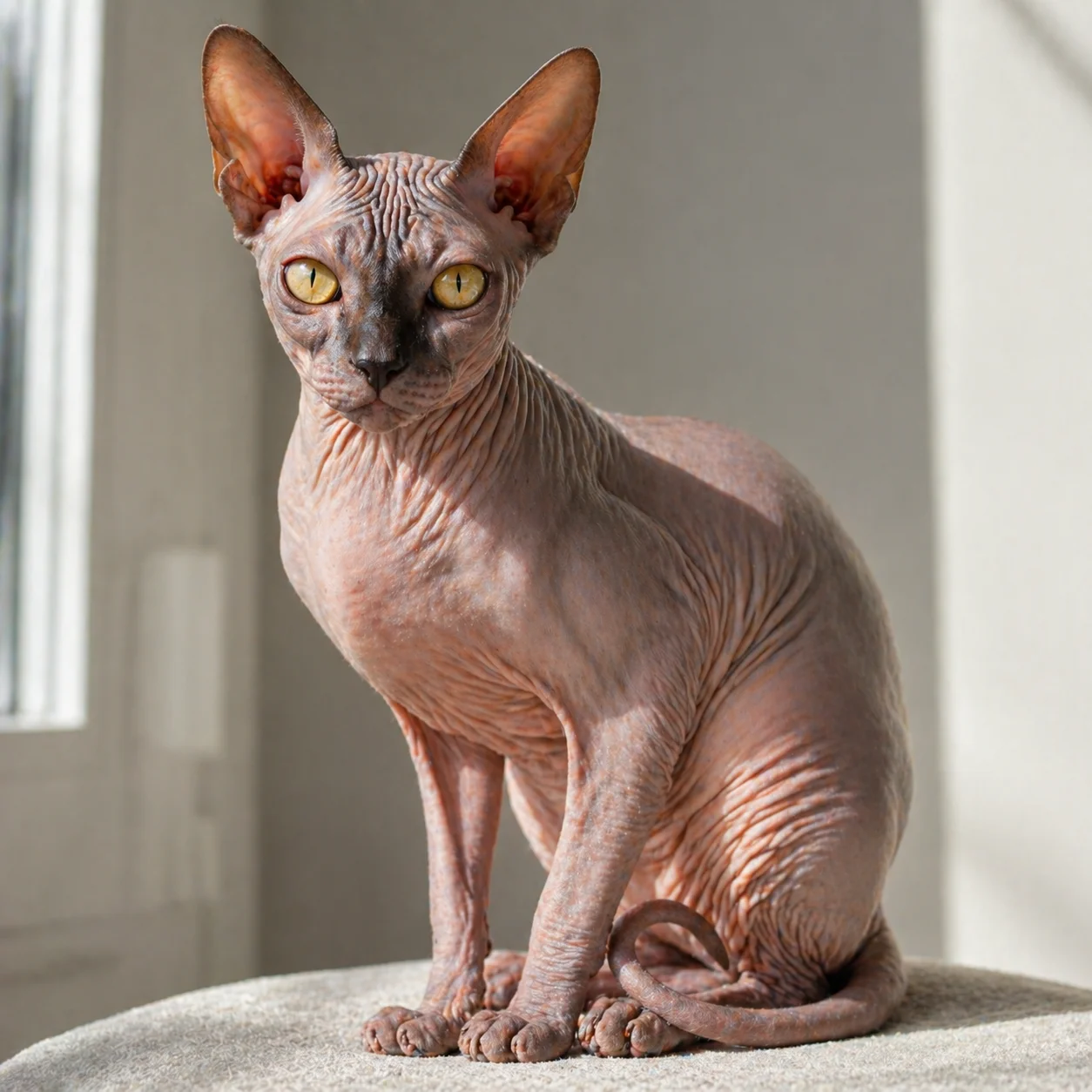
The Sphynx is the breed most associated with hypoallergenic claims — and the claim is largely inaccurate. The Sphynx produces Fel d 1 at levels similar to other cats. It does not shed fur, which reduces the hair-based distribution of allergens, but the protein disperses directly from the skin and in concentrated form because there is no coat to partially trap it before it becomes airborne.
That said, some allergy sufferers report better tolerance of Sphynx cats — likely because the absence of shed fur reduces the total physical contact surface for allergens in the environment, and because regular bathing of a Sphynx is easier without a coat to manage, reducing skin protein buildup. Regular bathing is more effective with a Sphynx than with any other breed.
Russian Blue
The Russian Blue appears consistently in allergy-friendly breed discussions based on anecdotal and community evidence rather than extensive clinical research. Many allergy sufferers report better tolerance of Russian Blues than other breeds. The breed produces a thick, plush double coat — but its Fel d 1 production may run lower than average for reasons not fully understood.
Bengal
The Bengal's short, fine, pelt-like coat sheds minimally and requires less grooming than most domestic cats. Less self-grooming means less saliva deposited on the coat — and therefore less Fel d 1 distribution through the environment. The mechanism is behavioural and coat-related rather than a fundamental reduction in protein production. For the Bengal-specific identification details that allergy sufferers researching this breed typically also need, the Bengal cat identification guide covers what distinguishes a genuine Bengal from a similarly marked domestic cat.
Cornish Rex
Like the Devon Rex, the Cornish Rex sheds minimally due to its short, wavy coat that lacks guard hairs. The reduced shed means less allergen distribution — not less production. Cornish Rex cats are often grouped with Devon Rex in allergy discussions, and both are reasonable choices for mild allergy sufferers looking for a smaller, lower-shedding option.
| Breed | Allergen mechanism | Research support | Coat type | Best suited for |
|---|---|---|---|---|
| Siberian | Lower Fel d 1 production | Peer-reviewed studies | Semi-longhair | Mild to moderate allergies |
| Balinese | Lower Fel d 1 production | Allergy specialist reports | Semi-longhair silky | Mild to moderate allergies |
| Devon Rex | Reduced shedding distribution | Community evidence | Sparse rippled short | Mild allergies |
| Cornish Rex | Reduced shedding distribution | Community evidence | Wavy, no guard hairs | Mild allergies |
| Russian Blue | Possibly lower Fel d 1 | Anecdotal / community | Dense double short | Mild allergies |
| Bengal | Reduced self-grooming distribution | Community evidence | Short, pelt-like, fine | Mild allergies |
| Sphynx | No shed fur — different distribution | Mixed / community | Hairless | Mild allergies + regular bathing |
Coat Length, Shedding, and the Allergen Connection
Understanding how coat type affects allergen distribution — rather than production — prevents one of the most common mistakes allergy sufferers make when choosing a breed.
Long-coated breeds that produce low Fel d 1 — like the Siberian and Balinese — may cause fewer reactions than short-coated breeds that produce higher Fel d 1. The coat length is irrelevant; the protein production level determines the allergen load in the home. Many allergy sufferers rule out longhaired breeds based on coat length alone and end up with a short-haired cat that causes more symptoms than a well-chosen longhaired breed would have.
Heavy-shedding breeds distribute allergens more widely throughout a home — onto furniture, carpets, and clothing — regardless of their Fel d 1 production level. A cat with average Fel d 1 production but heavy shedding disperses that allergen over a much larger surface area than a cat with average production and minimal shedding. This explains why a naturally heavy shedder like a Persian or Maine Coon tends to cause more reactions than a low- shedding breed producing the same amount of Fel d 1.
Indoor versus outdoor cats — or more accurately, the amount of self-grooming — affects distribution. A cat that grooms frequently deposits more Fel d 1-laden saliva on its coat than a cat that grooms less. This is partly why Bengal owners report better allergy tolerance — the Bengal's short, dense coat requires less self-maintenance, resulting in less saliva distributed across the coat per day.
The full breakdown of how coat patterns, textures, and types vary across breeds — including shedding rates — is covered in the cat coat patterns and breeds guide, which helps allergy sufferers cross-reference coat type against the allergen mechanism for any breed they're researching.
Practical Steps That Matter As Much As Breed Choice
Breed selection is one variable in allergen management — not the only one. These practical measures compound with breed choice and in some cases matter more than the breed itself.
HEPA air purifiers in rooms where the cat spends most time reduce airborne Fel d 1 significantly. A high-quality HEPA purifier running continuously can reduce ambient cat allergen levels by 50 to 90% in a single room. For many allergy sufferers, this is more impactful than breed choice alone.
Regular bathing of the cat — once every one to two weeks — reduces surface Fel d 1 levels dramatically. Most cats tolerate bathing if started as kittens. The Sphynx, with no coat to dry and tangle, is the easiest to bathe and benefits most from this protocol.
Hard flooring over carpet reduces allergen accumulation by a factor of several times. Carpet traps shed fur and dander for months and continues releasing allergens long after thorough cleaning. Hard floors allow regular cleaning that removes allergens rather than embedding them.
Keeping the cat out of the bedroom reduces the allergen load in the space where an allergy sufferer spends the most continuous hours. This single measure, applied consistently, produces noticeable symptom reduction for many people — more than breed selection alone in some cases.
Immunotherapy (allergy shots or sublingual drops) desensitises some allergy sufferers over 12 to 36 months to the point where any cat breed becomes tolerable. For severe allergy sufferers who are committed to cat ownership, this is a more reliable path than breed selection alone.
For allergy sufferers uncertain about which breeds might suit their specific situation — and whose allergy severity sits in the mild-to-moderate range where breed choice genuinely helps — the most common domestic cat breeds guide covers the full physical and behavioural profile of each breed, making it easier to cross-reference allergen-relevant breed traits against the lifestyle fit that also matters in breed selection.
What Every Allergy Sufferer Should Confirm About a Cat
The most important step before committing to any breed — including one marketed as hypoallergenic — is spending time with the specific animal before adopting. This means more than a 30-minute shelter visit. It means several hours of exposure in an enclosed space, followed by 24 to 48 hours of monitoring for delayed allergic response.
For allergy sufferers pursuing a Siberian specifically, ask the breeder for evidence of Fel d 1 testing on the parent cats. Responsible Siberian breeders test their breeding cats and communicate results to prospective buyers. A breeder who cannot provide or discuss allergen testing for their Siberian line is selling a breed claim, not a verified lower-allergen cat.
Before adoption, confirm the following with any breeder or rescue:
- Sex and neuter status of the specific cat (neutered male or female reduces allergen output significantly)
- Whether the parents have been allergen-tested (for Siberians)
- Whether you can arrange an extended visit before committing
For allergy sufferers who want to identify whether a cat they already own — or are considering adopting — might be a verified lower-allergen breed, cat DNA testing identifies breed ancestry with reasonable accuracy and can confirm whether a cat carries the genetic background of known lower-allergen breeds.
The distinction between a cat marketed as a lower-allergen breed and one that genuinely comes from verified lower-Fel d 1 lines is exactly the same distinction covered in the guide to purebred versus mixed breed cats — documentation and breeding history matter for verifying what a seller claims, regardless of whether the claim is about coat colour, conformation, or allergen levels.
We have put together a visual infographic summarising hypoallergenic cat breeds — covering the Fel d 1 mechanism, the seven lowest- allergen breeds with their specific mechanism and research support level, and the practical management steps that amplify the effect of breed selection — in a single reference image you can save and return to.
The research support column in the breed table is the section most allergy sufferers find immediately useful — it distinguishes which breed claims rest on peer-reviewed evidence versus community anecdote, so you can calibrate your expectations before adopting.

Frequently Asked Questions
Cat breeds and allergies: is any cat truly hypoallergenic?
No domestic cat breed produces zero Fel d 1. Every cat produces the protein responsible for human allergic reactions — the difference between breeds is how much they produce and how that production distributes through the environment. The term "hypoallergenic" as applied to cats means lower allergen, not no allergen. For mild-to- moderate allergy sufferers, a genuinely lower-producing breed combined with practical management steps can make cohabitation comfortable. For severe allergy sufferers, no breed reliably eliminates symptoms without additional medical intervention such as immunotherapy.
Are hairless cats like the Sphynx better for allergies?
Not necessarily, and often not as expected. The Sphynx produces Fel d 1 at levels similar to most other cats — it simply lacks the fur coat that in other breeds partially traps allergen particles before they disperse. Some allergy sufferers tolerate Sphynx cats better because no shed fur reduces physical allergen surface area in the home, and because hairless cats are easier to bathe regularly — which does significantly reduce skin allergen levels. But a Sphynx is not a reliably lower-allergen cat in the same way that a well- chosen Siberian from tested parents is.
Which cat breed is the safest choice for someone with cat allergies?
The Siberian has the strongest peer-reviewed research support for lower Fel d 1 production among domestic cat breeds. The Balinese follows closely based on consistent allergy specialist reports. Both require that you source from a responsible breeder who tests parent cats' allergen levels — the breed name alone does not guarantee lower allergen output because individual variation within breeds is substantial. A neutered female of either breed from tested parents, kept indoors with HEPA filtration, represents the most evidence-based combination available for a mild-to-moderate allergy sufferer who wants to own a cat.
Does cat hair cause allergies, or is it something else?
Cat hair itself does not cause allergic reactions — it is the vehicle for the actual allergen. The protein Fel d 1, produced in a cat's sebaceous glands and salivary glands, coats shed fur as a cat grooms itself. When that fur is shed, the dried protein becomes airborne on microscopic dander particles. These particles land throughout the home and persist for months. This is why short-haired cats are not reliably lower-allergen than longhaired cats — the hair length affects how the allergen distributes, but not how much is produced at the source.
Hypoallergenic cat breeds: how do I test my reaction before adopting?
Arrange an extended visit with the specific cat — ideally two or more hours in an enclosed space rather than a brief shelter interaction. Bring any antihistamines you typically use and note whether symptoms develop during or after the visit. Follow up over the next 48 hours, as some allergic responses are delayed. If possible, ask to borrow a blanket or item of bedding the cat has used and live with it in your home for a few days before committing. For Siberians specifically, ask the breeder whether the parents have been Fel d 1 tested and request the results — this is the most reliable pre-adoption test available outside of a clinical allergen panel.